Michael Kirkham
Neurodiversity LUMC
Apathetic, aimlessly staring into space, and lost in their own world. At first glance, this artwork resembles the stereotype of autism. However, there is much more to this than meets the eye. People with autism, for example, may dwell on upcoming social situations. They consider all possible scenarios: how they should respond, what is the social norm, and what the unwritten rules are.
As a result, the threshold for approaching others can become higher. They do not always know how to connect with other people and may therefore feel alone in a room full of people. The world is structured just a little differently from how they experience it, with unwritten rules that seem self-evident to neurotypical people.
…Apathetic, aimlessly staring into space, and lost in their own world. At first glance, this artwork resembles the stereotype of autism. However, there is much more to this than meets the eye. People with autism, for example, may dwell on upcoming social situations. They consider all possible scenarios: how they should respond, what is the social norm, and what the unwritten rules are.
As a result, the threshold for approaching others can become higher. They do not always know how to connect with other people and may therefore feel alone in a room full of people. The world is structured just a little differently from how they experience it, with unwritten rules that seem self-evident to neurotypical people.
In this artwork, we see the inner world of someone searching for their own way to connect with others. Not because there is anything wrong with that way, but simply because it looks different. That is exactly what our network stands for: creating space for different ways of being and recognizing that connection does not look the same for everyone.
At first glance, this artwork resembles the stereotype of autism. However, there is much more to this than meets the eye. . People with autism, for example, may dwell on upcoming social situations. They do not always know how to connect with other people and may therefore feel alone in a room full of people.
About the work
The English artist Michael Kirkham (1971) is fascinated by the lame characteristic state of mind for young people in puberty.
In his drawings, paintings and sculptures, he depicts boys and girls bored, apathetic and staring aimlessly ahead. In a smooth, realistic style, he portrays the indolence of the main characters. While life rushes on outside, the figures seem completely cut off from the world. This painted bronze statue depicts an introverted boy absorbed in his own world.
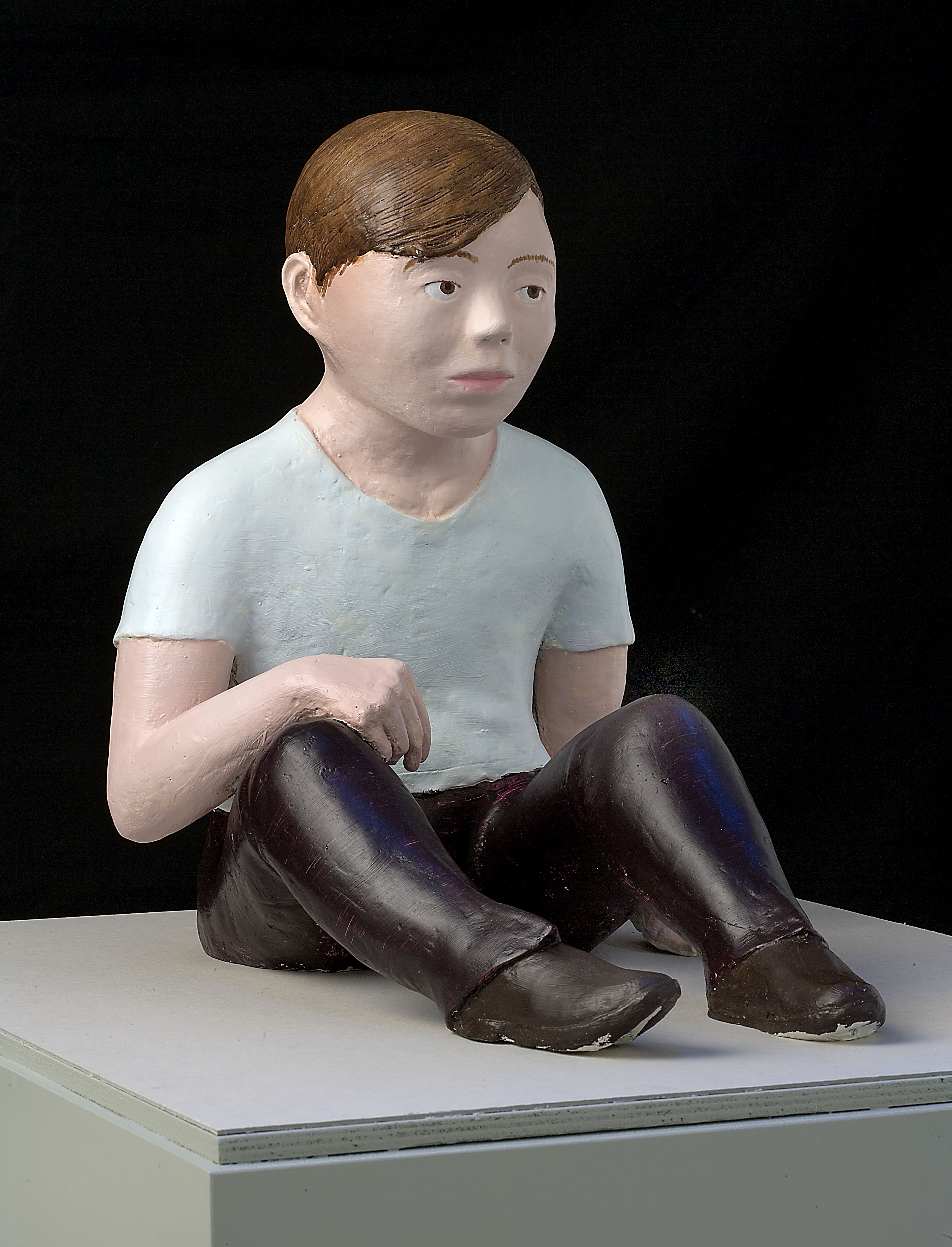
Bronze acrylic, 50 x 50 x 35 cm, 2005