Lana Mesic
LUMCdiversity
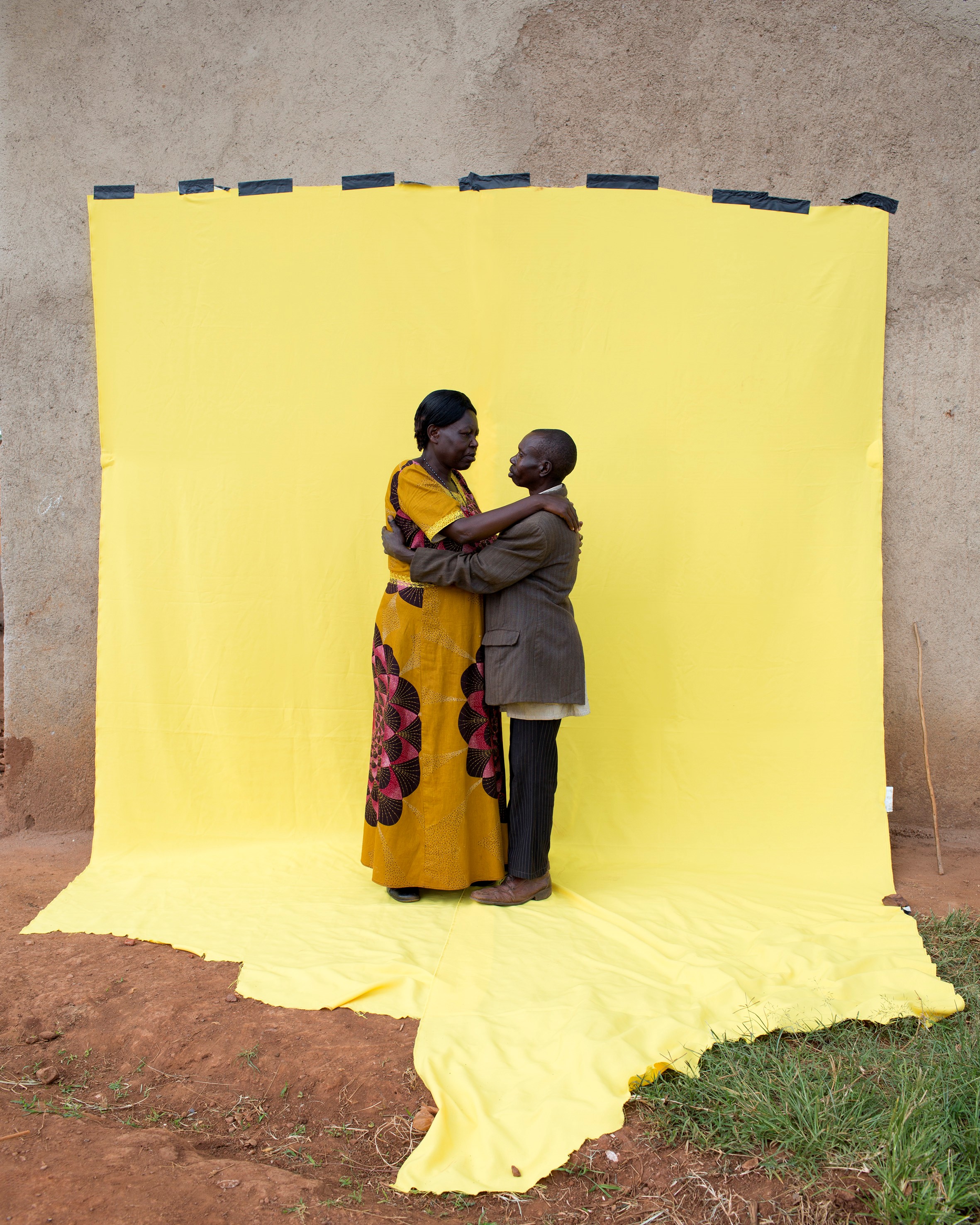
Lana Mesić (1987) created this work for the project Rwanda 20 Years, Portraits of Reconciliation, twenty years after the 1994 genocide. Through a reconciliation program, she found survivors and perpetrators who had rebuilt relationships with one another. They were often neighbors who had been living side by side again for many years.
She asked them a single question: what did the moment of forgiveness look like? She then invited the participants to stage that moment themselves against a yellow backdrop in the landscape. In doing so, she gave them control over their own representation.
…Lana Mesić (1987) created this work for the project Rwanda 20 Years, Portraits of Reconciliation, twenty years after the 1994 genocide. Through a reconciliation program, she found survivors and perpetrators who had rebuilt relationships with one another. They were often neighbors who had been living side by side again for many years.
She asked them a single question: what did the moment of forgiveness look like? She then invited the participants to stage that moment themselves against a yellow backdrop in the landscape. In doing so, she gave them control over their own representation.
Mesić deliberately chose not to amplify personal stories or dwell on sensational details. Her interest lies in reconciliation itself. In Rwanda, forgiveness is not a sentimental gesture but a prerequisite for moving forward with life.
Mesić asked people who had inflicted the worst possible harm on one another to show how they expressed forgiveness.
What you see is not a gesture for the camera, but the everyday reality of neighbors who must carry on together.
In organizations too, injustice does not disappear simply by remaining silent.
It begins with acknowledging what has happened.
About the work
Lana Mesić (1987) was commissioned in 2014 for a photo series related to the genocide in Rwanda for the project 'Rwanda 20 Years: Portraits of Reconciliation'. Mesić asked the victims to recreate their moment of forgiveness.
The survivor and the perpetrator are embracing each other in this photo, although somewhat reserved. According to Mesić, forgiveness is the only way people can move on with their lives in Rwanda. Forgiveness of the other and of yourself.
Hahnemuhle photo rag print, 102 x 82 cm 2015