Department of Radiology
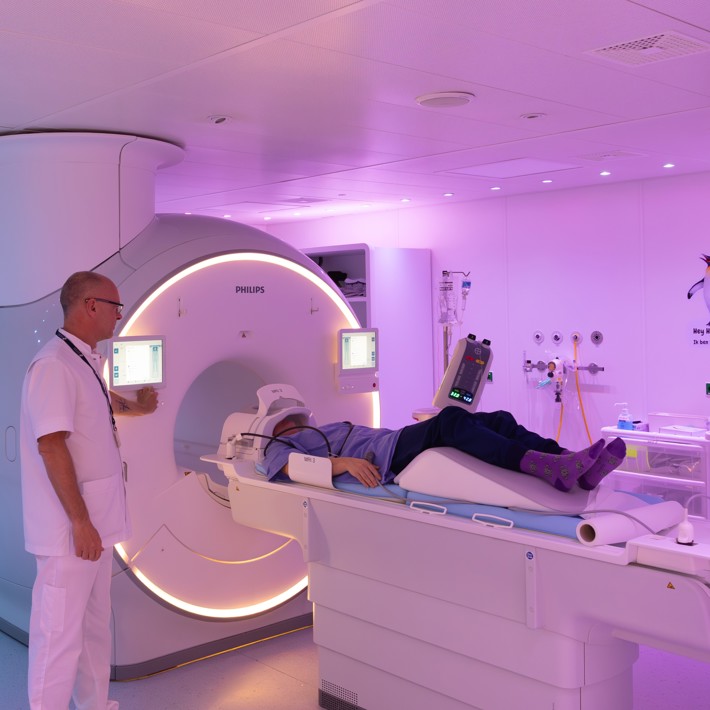
In addition to regular patient care, we also focus on research and treatments that require additional (scientific) knowledge compared to general hospitals; "top-clinical and top-priority" care.
What do we do?
- Performing and assessing imaging research using CT, Ultrasound, Interventional radiology, Mammography, MRI, Nuclear Medicine, X-rays
- Image-guided diagnostics: punctures and biopsies
- Image-guided treatment using interventional radiology. These are treatments in which minimally invasive tumor cells are destroyed by heating, freezing, or electrical pulses after needle insertion (as radiofrequency ablation/RFA) or after insertion of thin tubes through the bloodstream (for example, trans-arterial chemoembolization or radioembolization). In addition, we perform abscess drainage (relieving inflamed fluid collection) and stent placements
- We play an important role in rapid diagnostics and participate in virtually all care pathways
- We collaborate with all available specialties/departments
- The LUMC is one of the 10 trauma centers in the Netherlands for the care and treatment of complex accident patients. The Radiology department has an important role in quickly diagnosing trauma
- Each year, at the request of medical specialists inside and outside the LUMC (including general practitioners from the region), approximately 180,000 procedures are performed.
Contactgegevens
Postadres
Postzone
Postbus 9600
2300 RC Leiden
Bezoekadres
Secretariaat:
Locatie: C3-S
Telefoonnummer: 071 526 3474
Informatie voor de patiënt
Email: Radiologie@lumc.nl
Tussen 8.00-16.30 uur kunt u als patiënt de afdeling Radiologie bereiken via: 071 526 20 32
Buiten kantooruren kunt u de dienstdoende radioloog bereiken via de LUMC telefooncentrale via: 071 526 91 11
…Postadres
Postzone
Postbus 9600
2300 RC Leiden
Bezoekadres
Secretariaat:
Locatie: C3-S
Telefoonnummer: 071 526 3474
Informatie voor de patiënt
Email: Radiologie@lumc.nl
Tussen 8.00-16.30 uur kunt u als patiënt de afdeling Radiologie bereiken via: 071 526 20 32
Buiten kantooruren kunt u de dienstdoende radioloog bereiken via de LUMC telefooncentrale via: 071 526 91 11
Informatie voor verwijzers
Tussen 8.00-16.30 uur kunt u de administratie van de afdeling Radiologie bereiken via: 071 526 20 32
Beeldmateriaal opvragen/vragen: lumc-beeldenuitwisseling@lumc.nl
Alleen in spoedeisende gevallen kunt u buiten kantooruren contact opnemen met de dienstdoende laborant Radiologie via de telefooncentrale van het LUMC: 071 526 91 11
Contact over Onderwijs en Research
Nucleaire Geneeskunde
Meedoen aan onderzoek
Patiëntgebonden wetenschappelijk onderzoek
Wanneer u zich als patiënt laat onderzoeken of behandelen door het LUMC kan het gebeuren, dat u gevraagd wordt om aan wetenschappelijk onderzoek deel te nemen.
Patiëntgebonden wetenschappelijk onderzoek is van groot belang voor het ontwikkelen van nieuwe onderzoeken of behandelingen. U bent volledig vrij in uw keuze en uw besluit heeft geen effect op uw behandeling.
…Patiëntgebonden wetenschappelijk onderzoek
Wanneer u zich als patiënt laat onderzoeken of behandelen door het LUMC kan het gebeuren, dat u gevraagd wordt om aan wetenschappelijk onderzoek deel te nemen.
Patiëntgebonden wetenschappelijk onderzoek is van groot belang voor het ontwikkelen van nieuwe onderzoeken of behandelingen. U bent volledig vrij in uw keuze en uw besluit heeft geen effect op uw behandeling.
Gezonde vrijwilligers
Indien u als gezonde vrijwilliger deel wilt nemen aan een wetenschappelijk onderzoek kunt u zich ook opgeven.
Zie voor meer informatie over proefpersonen / wetenschappelijk onderzoek binnen het LUMC: Bontiusstichting.
Doorverwijzen, aanvragen en uitslagen
Binnen de afdeling Radiologie worden zowel beeldvormende diagnostiek als door beeldvorming ondersteunde diagnostische en therapeutische interventies verricht. Er worden jaarlijks ca. 180.000 procedures uitgevoerd op verzoek van medisch specialisten.
Polikliniek
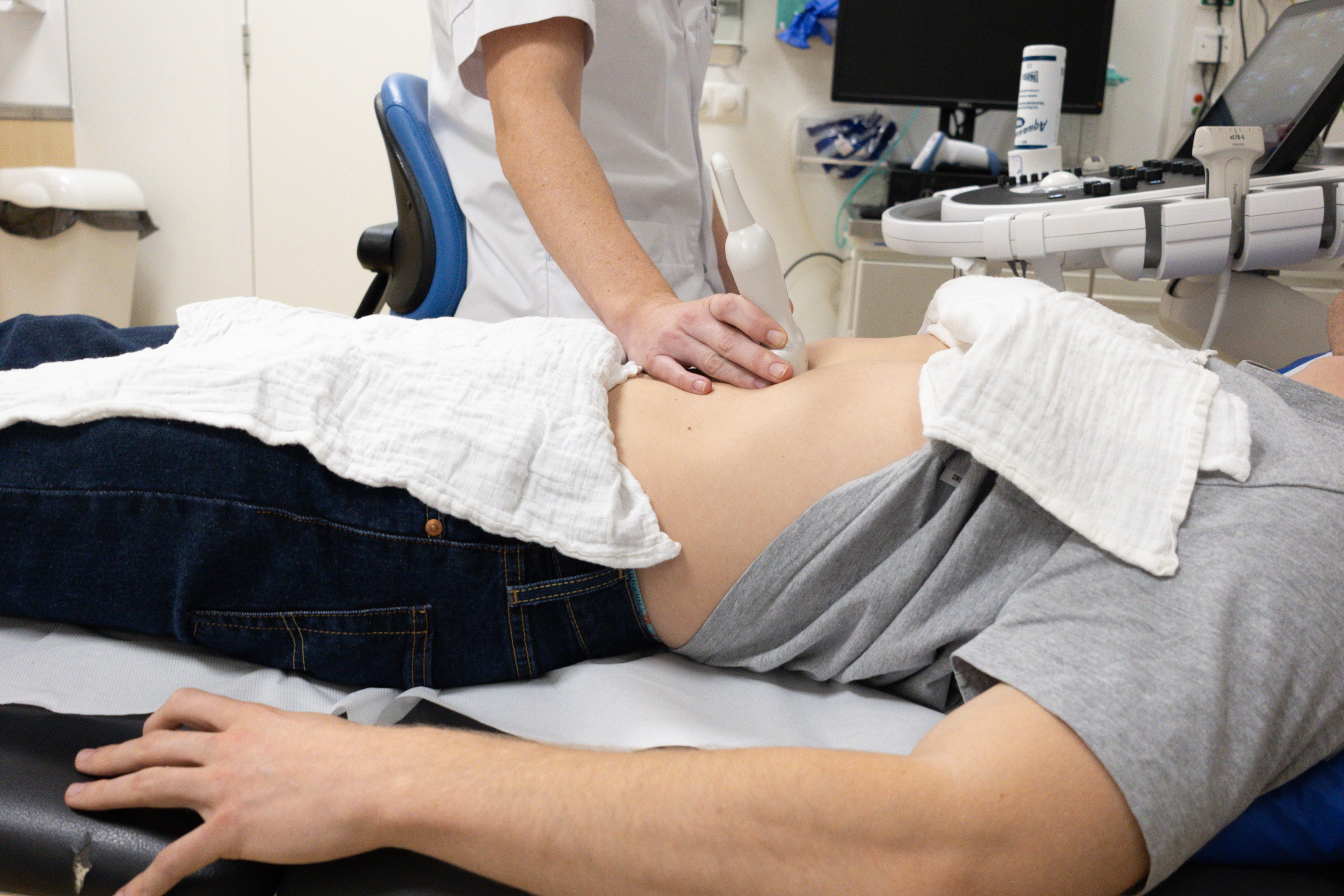
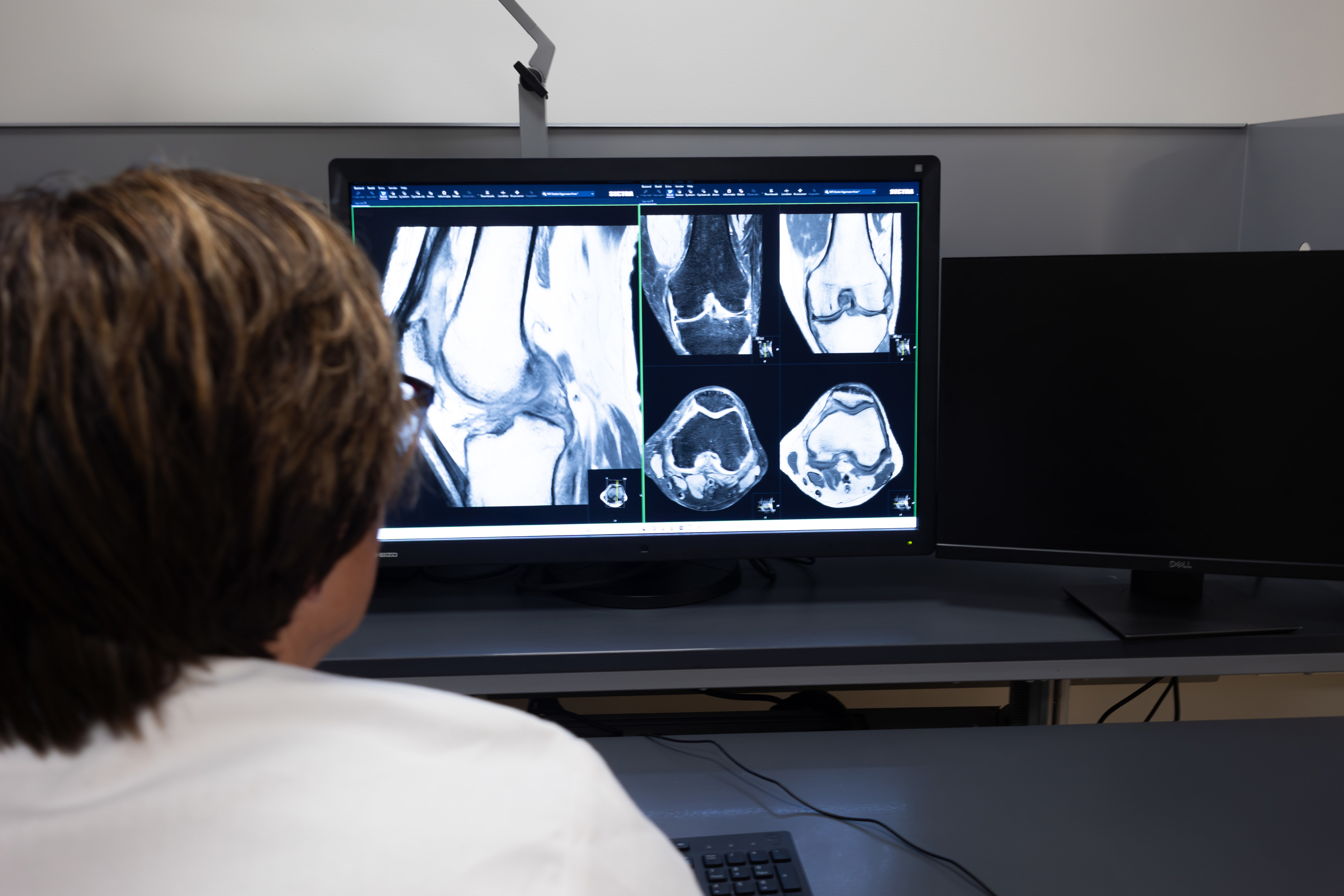
Op onze polikliniek gebruiken wij conventionele röntgentechnieken (röntgenfoto's), doorlichting, echografie, computertomografie (CT), interventie radiologie, magnetic resonance imaging (MRI), mammografie en mammo CT en nucleaire geneeskunde voor het stellen van diagnoses en het uitvoeren van behandelingen.
Op pagina van de polikliniek Radiologie leest u onze patiëntenfolders.


Veiligheid en kwaliteit
Wij waarborgen de kwaliteit van de zorg en de veiligheid van de patiënten, proefpersonen en medewerkers.
Aandachtspunten:
- Patiëntgericht, waarbij redelijkerwijs rekening wordt gehouden met uw wensen
- Doeltreffend en doelmatig; u wordt zo snel mogelijk en tegen de laagst mogelijke prijs geholpen
- Professioneel niveau, onder andere door beroepsverenigingen erkend
- Zo veilig mogelijk, d.w.z. met zo min mogelijk risico voor de patiënt en medewerkers
Veiligheid
De commissie kwaliteit & veiligheid van de afdeling zorgt er voor dat de veiligheid ten allen tijde goed wordt bewaakt. Risico’s worden in kaart gebracht en waar nodig worden noodzakelijke maatregelen getroffen. Aandachtsgebieden zijn o.a.: het omgaan met straling en magnetisme, het voorkomen van (kruis) infecties en het veilig toedienen van medicijnen en contrastmiddelen.
Diagnostiek en behandelingen
In our department, students are trained to become, among others, radiologists and nuclear medicine specialists, clinical researchers (OIO), clinical physicists, and radiodiagnostic laboratory technicians. We primarily provide education to students in
In addition, we provide further training and further education for medical specialists and paramedics. Students can do both science internships and clinical internships in the Radiology department. For information about specific
Opleidingen
Our scientific research focuses on developing new methods to medically and technically analyze disease processes. Clinical relevance is always assessed. The research is highly integrated into patient care and education. The Gorter Center, LKEB, and LIBC are the scientific modalities in the department.
Due to the international nature of medical research, the in-depth information is in English.
Research programs
Our aim is to develop imaging technologies that can be used in patients for diagnostic purposes or as instruments to increase our understanding of diseases. Consequently, research in our technological themes is tuned to the needs in our biomedical themes. In practice, our research is characterized by close interdisciplinary interactions across the various themes and with partners from outside our department.
The themes of our research program are embedded in the following research groups:
…Our aim is to develop imaging technologies that can be used in patients for diagnostic purposes or as instruments to increase our understanding of diseases. Consequently, research in our technological themes is tuned to the needs in our biomedical themes. In practice, our research is characterized by close interdisciplinary interactions across the various themes and with partners from outside our department.
The themes of our research program are embedded in the following research groups:
Imaging technology based lines:
- Automated image processing and quantification (coordinator Prof. Dr. Ir. B.J. Lelieveldt
- Interventional radiology (coordinator dr. M.C. Burgmans)
- Interventional/intraoperative molecular imaging (coordinator Prof. Dr. F.W.B. van Leeuwen)
- MRI (coordinator Prof. Dr. Ir. M.J.P van Osch)
- Nanomedicine and Molecular Imaging (coordinator Dr. L.J. Cruz)
- Nuclear Medicine (coordinator Prof. Dr. L.F. de Geus-Oei)
Organ based lines:
- Abdominal (coordinator Dr. M.N.J.M. Wasser)
- Breast (coordinator Drs. E.M.C Voormolen)
- Cardiovascular & thoracic (coordinator Prof. Dr. H.J. Lamb)
- Musculoskeletal (coordinator Dr. K. van Langevelde)
- Neuroradiology (coordinator Dr. J.H.J. M. de Bresser)
Research organisation
The Group Leader Board (GLB) is responsible for the organizational aspects of our research programmes. All project leaders of our research lines and the manager of the department are members of the GLB. Two members of the GLB are representatives, one with a clinical and one with a technological background. They are part of the department and report to the chair of the Department of Radiology.
The Scientific Committee (Wetenschapscommissie) is responsible for assessing the quality and feasibility of new research proposals from within and outside the department, keeping track of accepted projects, and distributing time slots for research on our imaging systems. The chair of this committee reports to the MTR.
The Radiology Consultancy Center (RCC) of our department provides services for large-scale patient studies in terms of study design, data analysis, and data storage. The chair of the RCC reports to the MTR.
The Radiology department consists of:
- Conventional Radiology (also ED, clinic)
- Interventional Radiology (LIGT)
- MRI
- CT (also ED)
- Mammography (mainly AB-CT)
- ultrasound
- Nuclear Medicine (including PET-CT and SPECT-CT)
- Laboratory for Clinical and Experimental Image Processing (LKEB) - scientific research
- Leiden Institute for Brain and Cognition (LIBC) - scientific research
- Gortercentrum - scientific research
Our department falls under cluster 4 and collaborates with various specialties within the LUMC. Furthermore, we collaborate with research and scientific institutions both within and outside the LUMC, other UMCs, and regional hospitals.
Scientific research
The scientific research focuses on developing new methods to medically and technically analyze disease processes. Clinical relevance is always assessed. The scientific research is highly integrated into patient care and education. The Gorter Center, LKEB, and LIBC are the scientific modalities in the department.
Education, training, further and continuing training
The department trains radiologists, nuclear medicine specialists, clinical researchers (OIO), and clinical physicists. It provides education to Medicine and Biomedical Sciences students and to HBO-MBRT students. Additionally, the department provides continuing education for medical specialists and paramedics. Students can do both science internships and clinical internships in the Radiology department.
Veelgestelde vragen
Research Consultancy Center
Het Research Consultancy Center (RCC) van de afdeling Radiologie van het LUMC biedt professionele ondersteuning bij zowel het opzetten als uitvoeren van radiologisch georiënteerd, mens-gebonden onderzoek op onze afdeling. Doel is om een positieve bijdrage te leveren aan het juiste design van onderzoek en aan de kwaliteit en integriteit van data, beeldbewerking en statistische analyses.
Het team bestaat uit een groep biomedische medewerkers met specifieke expertise, allen getraind op het gebied van Good Research Practice. Het RCC is het startpunt voor elk wetenschappelijk onderzoek op de afdeling Radiologie van het LUMC en is ook bij uitstek een geschikte contractpartner voor commercieel gefinancierd onderzoek.
MRPi scan faciliteit
Duurzaamheid
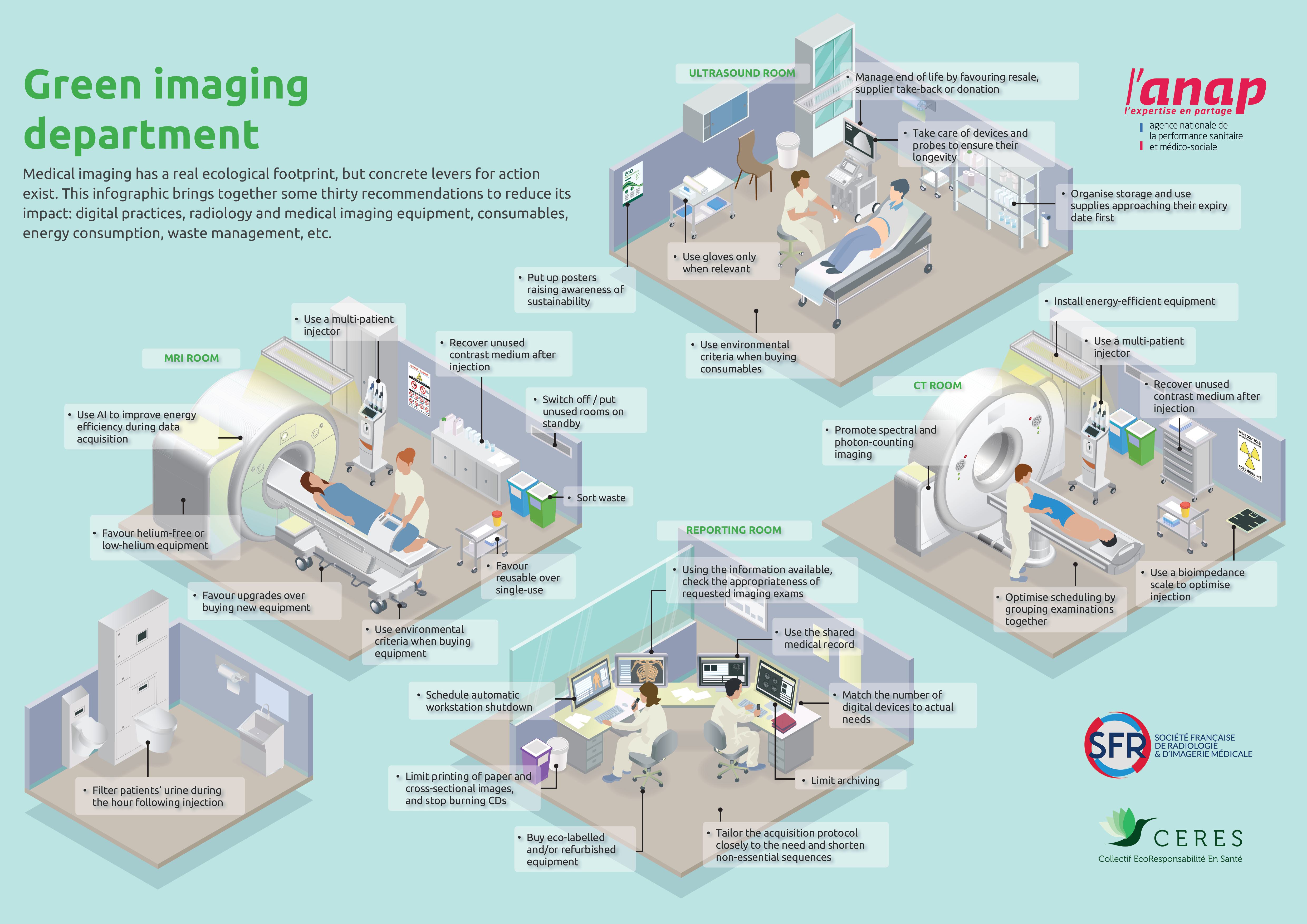 De afdeling heeft duurzaamheid als belangrijke prioriteit aangemerkt. Er is een greenteam aanwezig, die bestaat uit leden van alle geledingen op de afdeling en die periodiek overlegd. Waar we ons o.a. mee bezig houden:
- Energiebesparing instellen en monitoren t.a.v. alle grote apparatuur, randapparatuur en PC’s/werkstations
- Verspilling zorgmiddelen tegengaan
- Vermindering contrastmiddelverbruik
- Grondwatervervuiling door contrastmiddel tegengaan
- Contrastmiddel restafval recyclen
- Plastic en karton afval recyclen
Dit alles doen we in samenspraak met andere afdelingen binnen het LUMC en met andere Europese ziekenhuizen
Klik op de afbeelding om deze te vergroten.