Tailored solutions for older people with cancer: ‘We need to look at the individual’
&width=710&height=710)
Only by doing so can older patients make informed choices about treatment that truly aligns with their individual circumstances and preferences.
This article originally appeared on the Leiden University website.
‘Most of our patients are older people, but we know relatively little about how they respond to treatments,’ says Baltussen. ‘That makes it difficult to help them make the right decisions.’
Understanding is key
A central premise of Baltussen’s research is that there is no such thing as the older patient. ‘The
differences are enormous’, she explains. ‘Some 75-year-olds are fit, independent and full of energy, whereas others live with multiple health conditions and rely on care.’ These differences are captured in the word vulnerability. Vulnerable older people are at greater risk of adverse treatment outcomes, such as severe side effects, hospital admissions and loss of independence.
To gain a better understanding of this vulnerability, Baltussen argues for a vulnerability assessment: an evaluation of a patient’s physical, cognitive and social functioning combined with a conversation about their wishes and expectations. ‘This allows us to look beyond age alone’, she says. ‘You develop a clearer picture of what someone can cope with, which helps you to make informed decisions about treatment intensity or look together at supportive comfort-oriented care.’
Underrepresented in research
However, there is a structural problem with scientific research: older people are often underrepresented in clinical studies. Additional health conditions or lower fitness levels often mean they do not meet the strict selection criteria for trials of new treatments.
‘Many treatments are tested on younger, fitter patients’, Baltussen explains. ‘We then apply those findings to older people, without really knowing how they will respond.’ This creates uncertainty in the consultation room. Doctors must determine whether a treatment is safe and effective, despite a lack of robust data. ‘You can imagine some older people might stop chemotherapy because of severe side effects, when they might actually tolerate several cycles of a lower dose. These are exactly the kinds of insights we need.’
More side effects, different priorities
For her PhD research, Baltussen analysed data from hospitals in the Leiden region. The results show that vulnerable older people are more likely to experience severe chemotherapy-related side effects, such as infections, diarrhoea or repeated hospital admissions. These often have a greater impact on them than on less vulnerable patients, leading to a decline in quality of life and everyday functioning.
That makes treatment decisions more complex, especially because older patients often have different priorities. ‘Younger patients frequently opt for the most life-prolonging treatment available, whereas older adults tend to place greater emphasis on independence and quality of life’, she says. ‘For some, being able to continue living independently at home matters more than living a few months longer.’
Less intensive treatment
One of the key findings from her research is that less-intensive treatment can deliver better outcomes. In ongoing research, Baltussen and her colleagues are looking at whether lower doses of chemotherapy for older people with metastatic bowel cancer result in fewer side effects, fewer hospital admissions and fewer A&E visits without reducing effectiveness. ‘Older people are often treated according to standards developed for younger patients’, she says. ‘But if you can achieve the same result with a lower dose and cause less harm, that is a result.’
This research was funded by KWF Dutch Cancer Society and ZonMw. ‘Such funding is essential, especially because the pharmaceutical industry’s focus often lies elsewhere.’
Joosje Baltussen will defend her PhD on March 19 with her dissertation titled Frailty and Outcomes after Systemic Treatment in Older Patients with Cancer. Her supervisors are Prof. Dr. Johanneke Portielje, Prof. Dr. Simon Mooijaart, and Dr. Nienke de Glas.
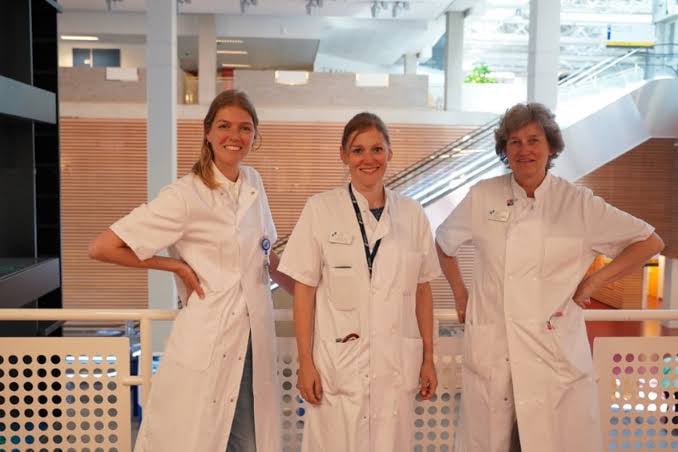
Joosje Baltussen (links) met de leden van haar promotieteam: Nienke de Glas en Johanneke Portielje.

&width=710&height=710)
&width=710&height=710)
&width=710&height=710)