Children's stomach, intestinal, and liver diseases

• difficulty with eating and drinking, causing the child to grow poorly;
• complaints requiring endoscopy of the stomach or intestines;
• chronic intestinal diseases, pancreatic, esophageal disorders, and IBD.
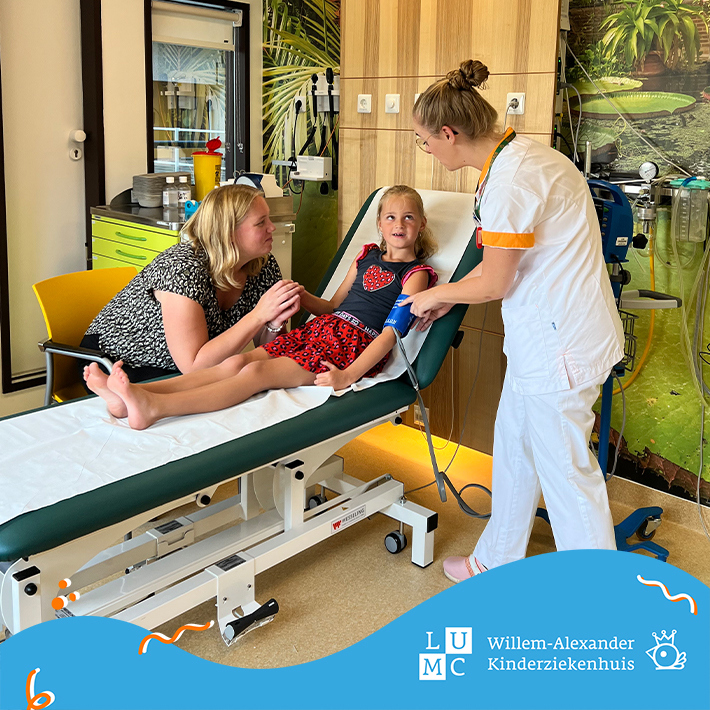
The ward also treats other diseases where the child suffers from stomach, intestines, or liver issues. For example, children who experience intestinal problems after a stem cell transplant.
In addition, we can also provide a so-called second opinion for children with diseases of the stomach, intestines, or liver. For this, a referral from a general practitioner or a pediatrician is required.
What can we do for your child?
If a child has been referred to the Willem-Alexander Children's Hospital, we discuss with the parents and the child what we will do to find an explanation for the symptoms (diagnosis). It is possible that tests will be carried out, such as a blood test, stool test, ultrasound, or gastro/colonoscopy. Once the explanation is found, we make a plan to treat the disease. This treatment may include, for example, advice on a healthy lifestyle, relaxation techniques, a special diet, medication, or surgery.
What are Gastroscopy and Colonoscopy?
Sometimes a screening examination is necessary. A 'gastroscopy' is done by mouth. Then we look at the esophagus, stomach, and duodenum. A 'colonoscopy' is through the stool. Then we look at the colon. During these examinations, the child is under anesthesia and does not notice anything. Afterwards, the child is admitted to the day treatment.
Treatment
We create the treatment plan together with the parents. If the child is older than 12 years, we also do this together with the child themselves. Sometimes multiple treatments are possible. Then we discuss the pros and cons of these treatments so that a choice can be made together.
Healthy lifestyle
For more and more diseases, advice is given about a healthy lifestyle. With a healthy lifestyle, nutrition, exercise, and a good balance between activity and rest are important. For example, irritable bowel syndrome is common in children. In such cases, relaxation techniques (hypnotherapy) can be used.
…We create the treatment plan together with the parents. If the child is older than 12 years, we also do this together with the child themselves. Sometimes multiple treatments are possible. Then we discuss the pros and cons of these treatments so that a choice can be made together.
Healthy lifestyle
For more and more diseases, advice is given about a healthy lifestyle. With a healthy lifestyle, nutrition, exercise, and a good balance between activity and rest are important. For example, irritable bowel syndrome is common in children. In such cases, relaxation techniques (hypnotherapy) can be used.
Sometimes a diet can help, for example as a treatment for gluten intolerance. Or as part of the treatment, alongside medication, as in Crohn's disease.
If necessary, we administer medication. We do this in consultation with the parents and the child. We explain how the medications work and what the side effects might be.
Patient brochures
Appointment and admission
An outpatient appointment
An outpatient appointment with the pediatric gastroenterologist at the Willem-Alexander Children's Hospital takes place in the City ward. The medical assistant measures and weighs the child, and sometimes blood tests are necessary.
Children with stomach, intestinal, or liver diseases sometimes need medication via IV. This is usually possible during day treatment. This is also available at the City ward.
Hospitalized
Sometimes children have to be admitted to the Willem-Alexander Children's Hospital. Children with stomach, intestinal, and liver diseases are admitted to Bos or Strand hospitals.
Scientific research
Why scientific research?
The ultimate goal of our scientific research is to find out how stomach, intestinal, and liver diseases arise and which factors play a role in them. The ultimate goal is that these diseases can be cured or even prevented in the future.
celiac disease
We conduct a lot of research on celiac disease. We want to know who is at greatest risk of developing celiac disease and which factors play a role in the development of the disease. These can be, for example, hereditary factors. Or factors from the environment or the immune system. We investigate this in the PreventCD study. We also research how to diagnose celiac disease as quickly and effectively. Click here for more information about this research.
…Why scientific research?
The ultimate goal of our scientific research is to find out how stomach, intestinal, and liver diseases arise and which factors play a role in them. The ultimate goal is that these diseases can be cured or even prevented in the future.
celiac disease
We conduct a lot of research on celiac disease. We want to know who is at greatest risk of developing celiac disease and which factors play a role in the development of the disease. These can be, for example, hereditary factors. Or factors from the environment or the immune system. We investigate this in the PreventCD study. We also research how to diagnose celiac disease as quickly and effectively. Click here for more information about this research.
Immune system in celiac disease and inflammatory bowel diseases
Together with Frits Koning's research group, we are studying the immune system in people with celiac disease and inflammatory bowel diseases (IBD).
Inflammation of the intestine or liver after stem cell transplantation
We also collaborate with the Pediatric Stem Cell Transplantation department at the Willem-Alexander Children's Hospital. Children who receive a stem cell transplant can have an inflammatory reaction of the intestines or liver. This is called graft-versus-host disease. We conduct research into (early) diagnosis and treatment of graft-versus-host disease.
More information
Here you can find more information about stomach, intestinal, and liver diseases.
Our team
Our team consists of 2 pediatric gastroenterologists, 1 fellow (pediatrician in training to become a pediatrician, gastroenterologist, liver doctor), and 1 physician assistant.