Two perspectives, one goal: examining the immune system in a Dutch–Tanzanian PhD collaboration
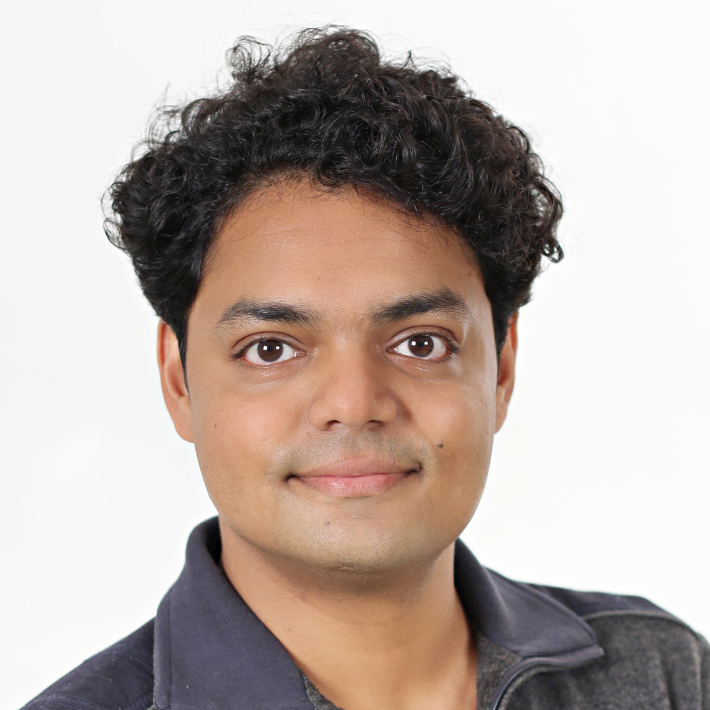
Marloes van Dorst and Jeremia Pyuza.
&width=710&height=710)
Their supervisor, Maria Yazdanbakhsh, recognized early on that combining these perspectives could strengthen a shared research project. In reflecting on their collaboration, Marloes and Jeremia describe how much they learned about each other’s cultures, their own disciplines, and themselves.
The collaboration consists of two closely interconnected PhD projects that explore how the immune system varies across different social and environmental contexts. In her dissertation, Marloes combines research from Indonesia and Tanzania to investigate immune differences within and between populations. Jeremia’s dissertation builds on the Tanzanian component and focuses on factors that influence immune variation and determine responses to vaccination. Together, their work demonstrates how living conditions, lifestyle, and environment shape immune function, and how comparing these factors across countries adds depth to scientific research.
At the outset, both researchers expected that their skills would complement one another. Marloes explains: “Because he is a physician with a more clinical background and I am more of a scientist, I expected our expertise to complement rather than overlap. And I think that really did happen.” Jeremia expected the collaboration to help him transition into a new academic environment and to give him the opportunity to work with modern technologies such as flow cytometry. “Marloes made this process much easier,” he says. “On your own, it is always difficult to find your way in a new environment.”
Working at a distance initially made it challenging to interpret each other’s progress. Marloes described how Jeremia was working intensively in Tanzania, but that this was not always visible from the Netherlands. “He was working extremely hard there, but from the Netherlands it was difficult for me to see that. I found that very challenging at first.” Once they had spent time in each other’s environments, this gap became smaller. Cultural differences related to practical decision-making, timelines, and constraints gradually became easier to understand. Jeremia emphasizes the importance of in-person visits, noting that international collaborations benefit greatly when participants are able to visit one another, particularly when the primary activities take place on site.
Both researchers also learned far more about teaching than they had initially expected. Their experiences in Tanzania required flexibility and improvisation. Marloes taught statistics classes without presentations, and sometimes even outdoors, which showed her that effective teaching is primarily about engagement. Jeremia observed that Dutch students have a very different attitude toward education and display a wide range of learning styles. In Tanzania, students develop a form of resourcefulness that strongly shapes how they work. “It helps you appreciate how much you have,” he reflects. “You become more resilient, happier, and more grateful.”
The international nature of the project had a direct impact on the quality of their research. For Marloes, a project conducted entirely within a single context would have felt incomplete. Jeremia emphasized that exposure to different academic standards raised their ambitions and that access to advanced techniques enabled him to explore the immune system in greater depth.
Working across markedly different cultures and learning to adapt to new environments also contributed to their personal growth. Marloes discovered that she was capable of far more than she had initially thought. Jeremia described the impact as a form of “exponential growth,” which has better equipped him to add value to others.
Both encourage future students to make use of international opportunities. According to Marloes, international experiences help you “step out of your bubble and truly see the other.” Jeremia adds, “Combining different cultures has a strong synergistic effect.”
For both researchers, the collaboration was not only professionally valuable but also personally enriching. As Marloes notes, “It’s also just a lot of fun… exchanging food, families, songs, and music.” Their story illustrates how working across cultural boundaries changes the way researchers understand their work, their teaching, and one another. It shows how international collaboration prepares researchers for a world in which science is deeply connected to place, people, and perspective. LUMC Global supports international collaboration and mobility in research and education, and Jeremia received an LUMC Global PhD Scholarship for his research project.
&width=710&height=710)
&width=710&height=710)
&width=710&height=710)