New combination therapy offers hope for metastatic eye cancer
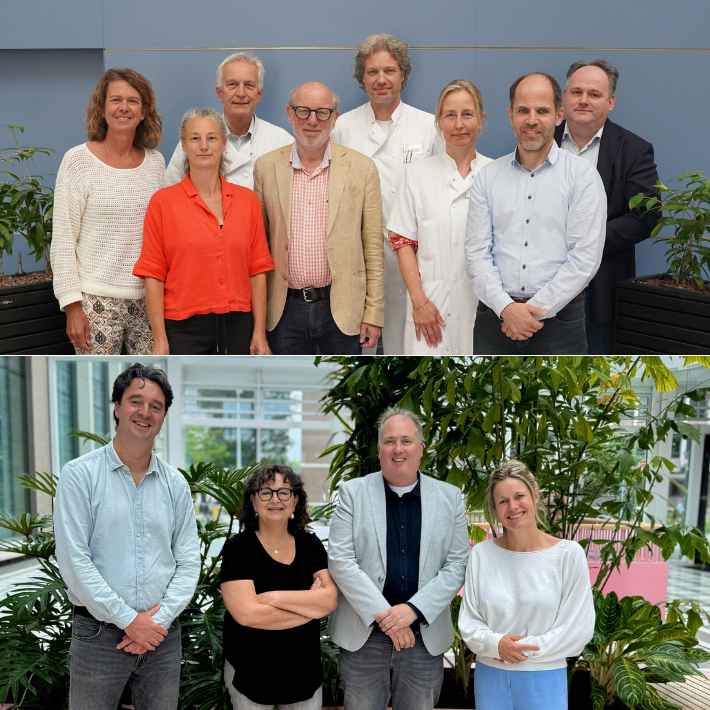
Ellen Kapiteijn and Mark Burgmans
&width=710&height=710 "Ellen Kapiteijn and Mark Burgmans")
Uveal melanoma = eye cancer
Uveal melanoma is a rare cancer that develops in the eye. While the primary tumor in the eye can usually be treated effectively, about half of patients later develop metastases, usually in the liver. For these patients, the prognosis is poor: on average, survival is around one year after the cancer has spread. Until now, few treatments have been shown to prolong survival.
The CHOPIN study
Medical oncologist and professor Ellen Kapiteijn and interventional radiologist Mark Burgmans investigated a new combination therapy for metastatic uveal melanoma. A total of 76 patients took part in the CHOPIN study, divided into two groups. All patients underwent liver perfusion.
Liver perfusion is a targeted procedure in which the blood flow to the liver is temporarily separated from the rest of the body. This allows doctors to administer a high dose of chemotherapy directly into the liver. The blood leaving the liver is collected and filtered outside the body to remove the chemotherapy, after which the blood is returned to the patient. In this way, the liver is exposed to a high concentration of chemotherapy while the rest of the body remains shielded. The LUMC is the only center in the Netherlands that offers this specialized treatment.
One group of patients received only chemotherapy via liver perfusion. The other group received liver perfusion in combination with immunotherapy (ipilimumab and nivolumab). This immunotherapy is also used in metastatic cutaneous melanoma and activates the patient’s immune system to attack cancer cells.
Combination therapy shows promise
The results are encouraging. The disease remained under control for a longer period in patients who received the combination therapy. On average, they also lived longer than patients who received liver perfusion alone. One year after treatment, the proportion of patients who were still alive and whose disease remained under control was three times higher in the combination therapy group than in the group receiving only liver perfusion.
This is the first study in metastatic uveal melanoma to clearly demonstrate that a combination of liver perfusion and immunotherapy can improve survival.
Although the combination therapy was associated with more side effects, these were temporary and generally did not require additional treatment. The researchers consider this approach to be an important new treatment option for patients with metastatic uveal melanoma. The results of this study were recently published in the scientific journal The Lancet Oncology.
Future prospects
The research will continue to follow patients to determine how long the treatment effect lasts and how the therapy can be used most effectively. In addition, the researchers aim to gain deeper insight into how the treatment works. Burgmans explains: “We will analyze blood and tissue samples from patients in the study to better understand how the immune system responds to both treatments. We are also assessing patients’ quality of life, using a smartwatch, an app and online questionnaires.”
“This is an important step forward for patients with metastatic uveal melanoma,” Kapiteijn adds. “For the first time, we are seeing that a combination of liver perfusion and immunotherapy significantly improves survival which is highly encouraging. We hope that reimbursement from insurers will become available soon, so that this treatment can be offered to our patients.”
More information
The departments of Ophthalmology, Radiology, Radiotherapy and Medical Oncology at the LUMC specialize in uveal melanoma and treat the majority of patients in the Netherlands. For decades, the LUMC has been the leading center for the diagnosis and treatment of uveal melanoma in the Netherlands.

&width=710&height=710)
&width=710&height=710)
&width=710&height=710)