Vaccines fall short in the countries that need them most: HypoVax Global aims to close the gap
Mikhael Manurung, Abena Amoah and Koen Stam.
&width=710&height=710)
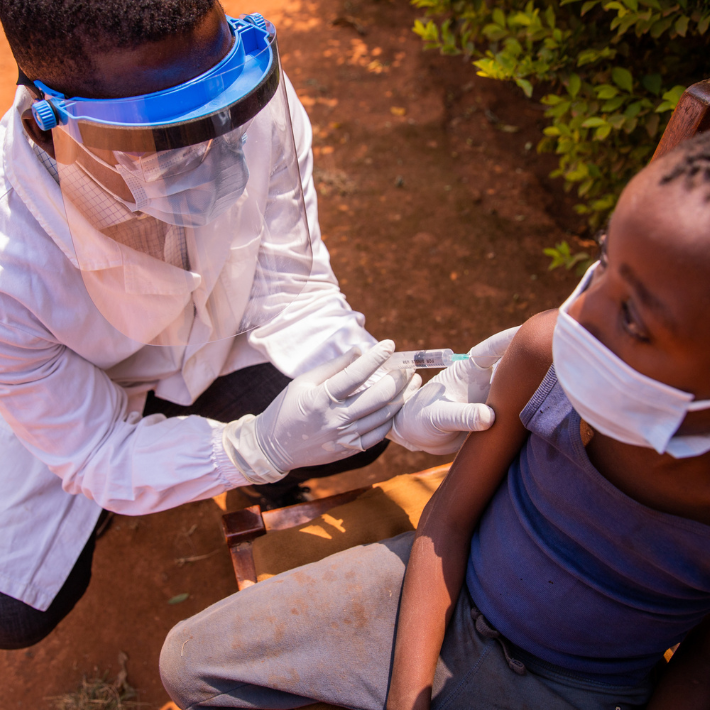
Vaccines against diseases such as malaria and rotavirus often perform better in high-income countries than in low- and middle-income countries. This is because they are usually developed and tested “here,” tailored entirely to countries in Europe and North America—the region often called the “Global North.”
The same vaccines often perform less effectively in countries of the “Global South,” such as in Africa, Asia, and Latin America. This difference in vaccine response is known as “vaccine hyporesponsiveness.” The reasons are complex: environmental factors, genetic differences among people, lifestyle, and nutrition all influence how the immune system responds.
Lack of data
Almost all research data also comes from the Global North. Without data from the Global South, these regions fall behind. HypoVax Global, a hub established at LUMC where researchers from Europe, Africa, Asia, and Latin America collaborate, aims to bridge this gap by combining datasets from all parts of the world.
“To understand why some vaccines work less effectively in certain populations, we want to collect more data from groups whose immune responses are currently under-studied,” says researcher and immunoepidemiologist Abena Amoah, who also leads HypoVax Global.
The network plans to achieve this by linking data from Europe and North America with data from Africa, Asia, and Latin America. This includes immunological data, such as antibody levels after vaccination, the number of immune cells and immune markers in the blood, as well as information on nutrition, lifestyle, and genetic factors. Combining this data provides a much more complete picture of how immune responses differ globally.
Laptop can already reduce inequality
Koen Stam, a data scientist at LUCID who is part of HypoVax, has a clear goal: “My life mission is to harmonize all the data and share it with our partners so we can all learn from it. For example, we have data on a malaria vaccine in LUMC but also one in Tanzania. If that data can later be compared with a study in Equatorial Guinea or Uganda, we can see differences in population, vaccination strategy, or vaccine adjuvants. Ultimately, this will help us create vaccines that work for everyone, not just high-income countries.”
In addition to sharing knowledge, proper infrastructure is needed to process all the data. This does not mean that countries in the Global South need to purchase expensive equipment, a financially limiting and unnecessary solution, according to Stam. “It’s better and easier to give them a good laptop and teach people how to analyze data. We believe this is a powerful way to reduce inequality.”
Amoah adds: “By training researchers from the Global South at LUMC, they can analyze the data they collect themselves. As owners of this data, they deserve the chance to do this independently, without having to send it to expensive laboratories in the North.”
Skepticism due to history
Collaborating on equal terms is a core principle of the hub, where mutual trust plays a key role. “Partners can be skeptical because of the long history of research practices, sometimes dating back to colonial times. Often it went like this: ‘We have the technology, you have the field knowledge. We’ll take your samples, your name appears somewhere in the article, but you don’t need to understand the results.’ Although things have improved, this history of marginalization remains in many researchers’ memories,” says Amoah.
Mikhael Manurung, a researcher at LUCID also part of HypoVax, adds: “For researchers in the Global South, it can be hard to believe that we truly want to collaborate as equals. That’s why we actively involve them in discussions regarding interpretation of data generated from their studies. They attend our meetings, and we emphasize the value of joining training programs here.”
He is working on a study to understand why malaria vaccines are less effective in countries with high malaria prevalence, such as Equatorial Guinea and Tanzania. “We compare vaccination responses there with those in Germany and the Netherlands. By bringing all the data together, we can better understand the differences and similarities in immune responses.” According to Manurung, such studies also help to see a connection with vaccinations among older people in the Global North. “In that group, vaccinations often work less effectively. This way, we can learn from each other how to improve those responses."
His dream is that every research center will eventually be able to conduct these measurements independently: “Everyone can then own their data, ask their own questions, and generate new insights that benefit the local population.”
Everyone must feel safe sharing data
The benefits of this collaborative way of working was detailed in a paper recently published in esteemed journal The Lancet Microbe, highlighting the importance of knowledge hubs such as HypoVax Global – itself founded by Spinoza prize winner and LUMC professor Maria Yazdanbakhsh.
Amoah concludes: “If you want to truly understand a problem like low vaccine response, you can’t just look at people in wealthy countries. You need to collaborate with people in the regions where the problem occurs. That means bringing people together, building trust, providing training opportunities, and establishing clear agreements within the collaboration so everyone feels safe sharing data. Only then can we build a strong global network.”

&width=710&height=710)
&width=710&height=710)